Business & Deals / TMT
T-Mobile's $4.4 billion acquisition of UScellular's wireless operations
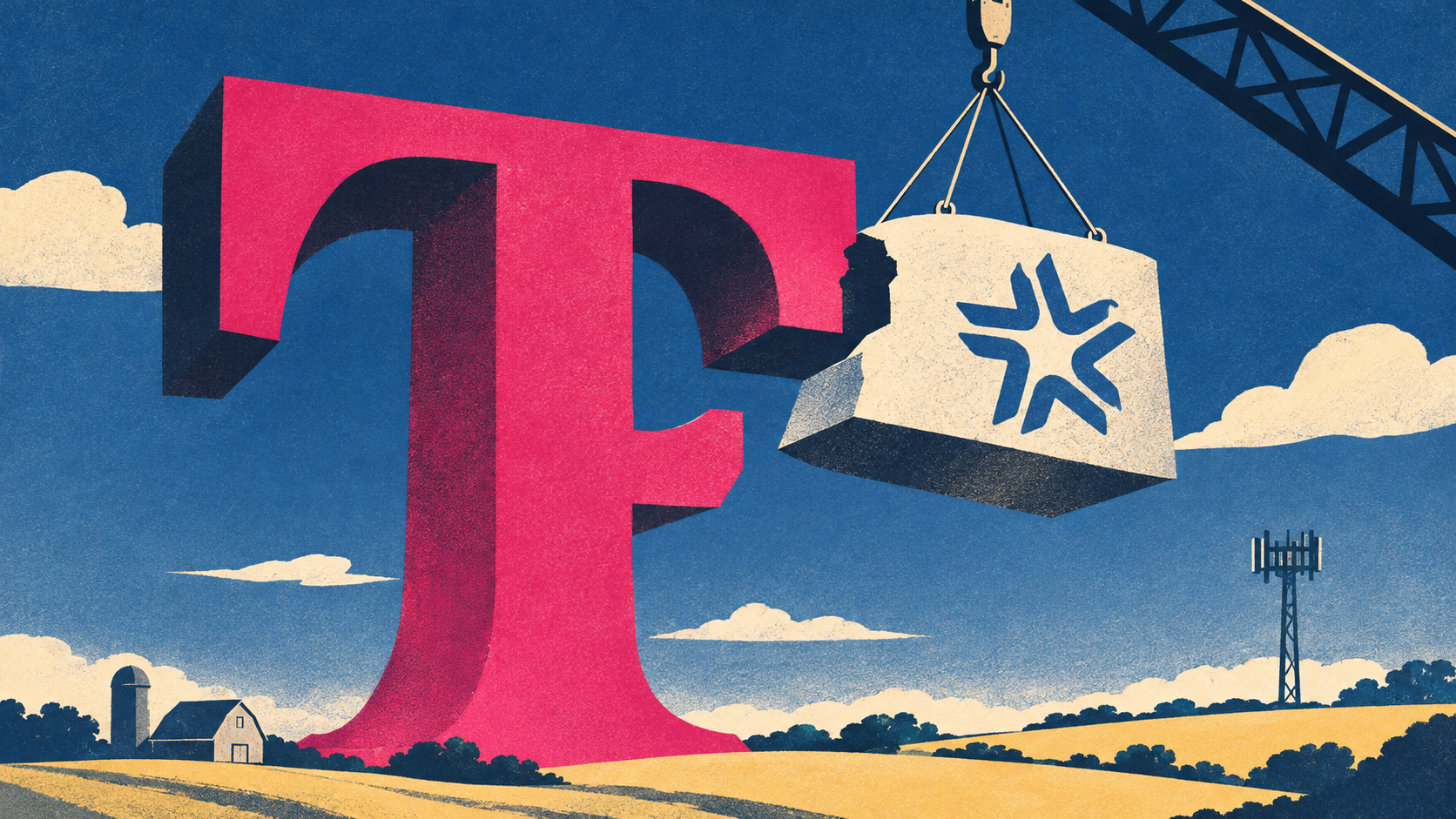
On May 28, 2024, T-Mobile announced that it agreed to acquire almost all of UScellular’s wireless operations, along with some spectrum assets, for about $4.4 billion in total cash and assumed debt. The deal was completed on August 1 2025, for about $2.6 billion in cash and tabindex="-1".7 billion in debt after some adjustments. Along with the retail stores and wireless network infrastructure, it also included more than 4 million wireless customers and about 30% of UScellular’s spectrum portfolio—the radio frequencies wireless companies use to provide cellular service.
T-Mobile’s reasoning behind this acquisition was to strengthen its position in the US wireless market. They were especially focused on rural areas where UScellular had an extensive presence, serving about 4.5 million customers, with about 40% of the population in UScellular’s coverage area living in rural communities. By combining the companies’ networks, T-Mobile attempted to expand its 5G coverage and reach new customers where its old network was underdeveloped.
For UScellular, the transaction was a major shift in the business strategy. Instead of selling the whole company, UScellular kept about 4,400 cell towers and about 70% of its spectrum portfolio. The company’s rationale was that it could leave the wireless service business, which was becoming increasingly competitive. Its new focus is to generate revenue from its telecommunications infrastructure.
The acquisition faced some regulatory concerns because it would reduce competition in the wireless industry and give T-Mobile more control over more spectrum. However, T-Mobile argued the deal would benefit customers by providing 5G coverage in areas with worse coverage. The Department of Justice also noted that UScellular was struggling with high costs to maintain and expand its network, making it harder to compete with larger wireless providers. Although the Department of Justice was concerned about reduced competition, it decided the benefits to rural customers outweighed the risk.
T-Mobile already has a large nationwide 5G network, and it also has the financial resources necessary to expand its network. This acquisition would improve its customer base and existing infrastructure, which gives T-Mobile a competitive size advantage against other wireless providers. However, combining UScellular’s network and large customer base with T-Mobile’s existing operations could be very expensive, as T-Mobile would face significant integration costs and will have to continue leasing some UScellular cell towers. For example, T-Mobile agreed to lease space on at least 2,600 UScellular towers for 15 years. The acquisition gives T-Mobile an opportunity to grow as demand for faster wireless service and more reliable internet, especially in rural areas, continues to rise. Many rural customers have fewer wireless options than those in larger cities, so gaining these new, diversified customers can increase T-Mobile's market share. However, T-Mobile still faces strong competition from major players like Verizon and AT&T, which also have large networks and significant financial resources. Both companies could respond to T-Mobile by offering lower prices or better deals. Government regulations are another potential threat. The wireless industry faces significant regulatory oversight, especially in spectrum ownership and mergers. Future restrictions could limit T-Mobile’s ability to buy additional spectrum or expand further by acquiring companies. At the same time, costs of building and maintaining wireless infrastructure are increasing. Cell towers, 5G equipment, and energy are becoming more expensive, which could make network expansion more difficult and expensive for T-Mobile.