
Hapag-Lloyd’s $4.2bn bid for ZIM highlights shipping’s relentless drive for scale. The deal promises stronger routes and cost synergies, but political tensions, falling revenues, and national-security concerns make its payoff far from certain.
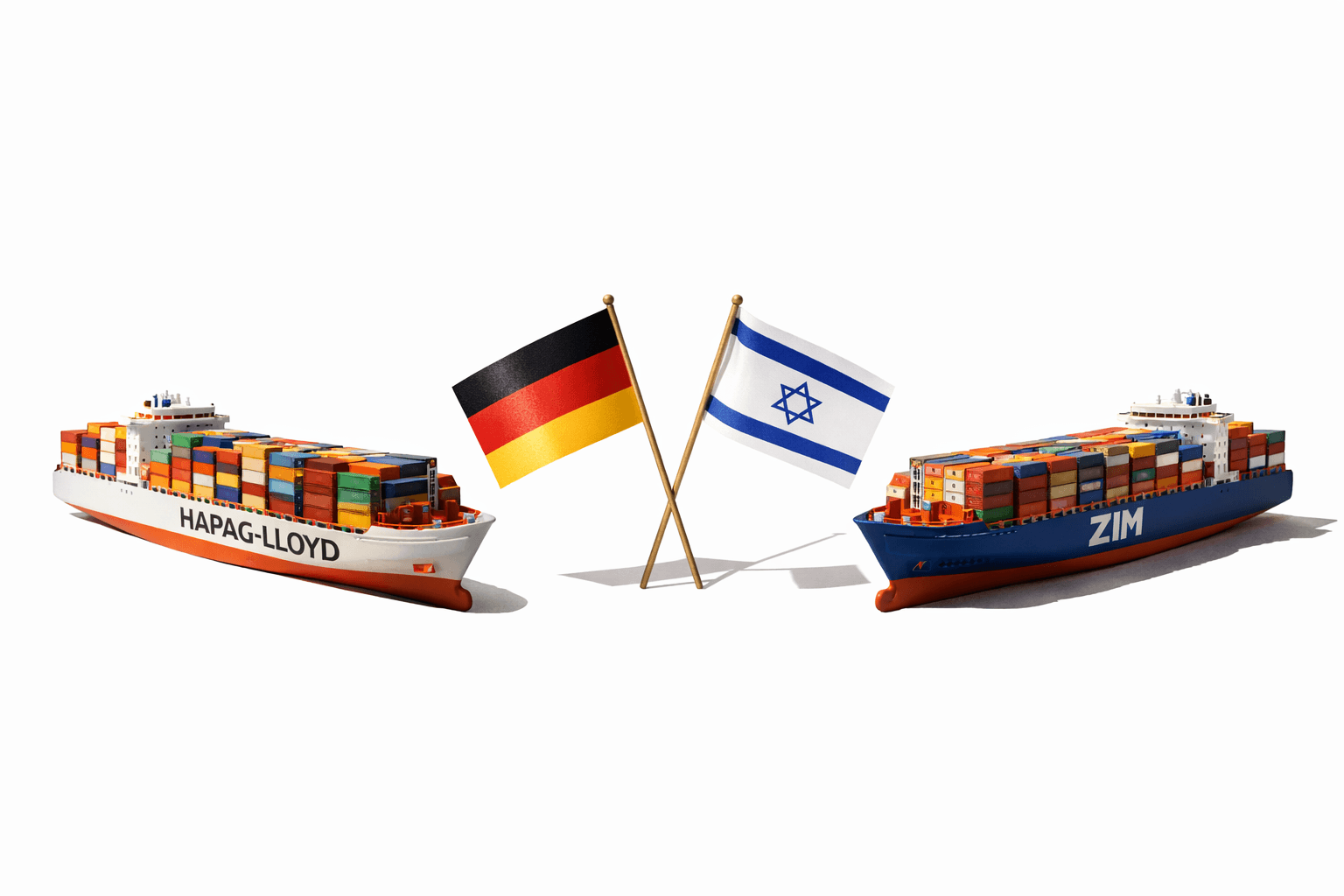
Hapag-Lloyd is paying $4.2 billion for an Israeli shipping line with falling revenue and a government that holds a “special state right” within ZIM. Shipping has always been an industry that relies on scale, as the biggest companies control 80% of global container capacity, making consolidation a defining feature of the sector. Companies with larger fleet sizes and route networks tend to hold stronger positions in global freight transport. On February 16, 2026, Hapag Lloyd, a German carrier, agreed to acquire ZIM Integrated Shipping Services for $35 per share and paying a 58% premium to the preannounced price and roughly $4.2 billion in total consideration. The deal brings together a German shipping company, Hapag Lloyd, one of the world's largest container carriers, with revenue recorded at over $20 billion. Hapag’s EBITDA margin is roughly 24%, reflecting both its scale and profitability. ZIM is a smaller Israeli shipping line that has generated $6.9 billion in revenue, and its EBITDA margin is around 33%.
ZIM’s revenue has dropped 36% year-on-year in Q3 2025, and analysts expect profits to keep normalizing after the pandemic highs. Moreover, Goldman Sachs projected 2026 EBITDA at just $1.6 billion which is way below the record profits ZIM earned during the pandemic period. Yet, in the past several years, ZIM has added 46 modern vessels to its fleet, and 40% of those are powered by liquified natural gas. These newer ships are particularly attractive as EU environmental taxes tighten and carbon-emissions regulations begin to bite. ZIM highly relies on long-term charter agreements rather than ownership of vessels. This chartering agreement strategy allowed ZIM to maintain its flexibility to compete on key routes.
One of the most important factors of this deal is geopolitical tension and national security. Since Hapag-Lloyd is partially owned by Qatar and Saudi Arabia, with combined stakes over 20%, this creates an uncertain tension in the acquisition. Because of this, the deal nearly didn’t go through as Israel has a “Golden Share” which gives the government veto power over any transaction affecting national security. Israel sees ZIM as a strategic asset, which is why this acquisition includes a carve-out of Israeli-focused assets and creation of "New ZIM," a smaller Israeli company with 16 vessels. FIMI, Israel’s largest and leading private equity fund, will take ownership of the carved-out section.
Whether the 58% premium being paid for ZIM is justified is one of the main questions in this deal. Given the large premium, Hapag-Lloyd anticipates substantial financial and strategic gains from the transaction. The merger of Hapag-Lloyd with ZIM would solidify Hapag-Lloyd's position as the world's fifth-largest container shipping firm, with a modern fleet of over 400 vessels, a standing capacity of over 3 million TEU, and an annual transit volume of more than 18 million TEU. The most strategic win is geographic. Before this deal, Hapag-Lloyd controlled roughly 7% of the Transpacific route, a crucial lane connecting Asian manufacturing companies to American consumers. After the acquisition, their market share could potentially increase to 12%, basically doubling their presence. On top of that, that size lets them save hundreds of millions annually. More specifically, Hapag-Lloyd CEO Rolf Habben Jansen projects up to $500 million in annual synergies, by buying fuel together, combining routes and cutting other costs.
At $35 per share, Hapag Lloyd is paying 7.2x the projected EBITDA. While the number may look steep for a company with falling revenue, looking at comparable deals, it can provide useful context. For example, when CMA CGM acquired Bollore Logistics in 2024, the multiple was around 10x EBITDA. By comparison, ZIM’s acquisition looks less aggressive.
On March 12, ZIM’s CEO Eli Glickman sold $39.5 million worth of shares at approximately $28 each, which is 23% below the $35 deal price. Several other executives made similar sales. Meaning he gave up $8 to $12 million in potential profits by selling early. This leads to the question: if the CEO believes the deal will close, why sell below the takeover price? While it could be explained by executives often selling shares to diversify their wealth or exercising stock options. Still, this leads to uncertainty for investors.
In the best-case scenario, the Israeli government approves this merger, and Hapag Lloyd successfully integrates ZIM’s fleet and routes into its global network, making the acquisition financially beneficial in the long run. In the most realistic case scenario, the deal may take longer than expected. Hapag Lloyd may have to make changes to the deal to satisfy the Israeli government and restructure “New ZIM” to keep more operations in Israel. Moreover, due to the recent union protest that happened immediately after the deal had been announced, around 800 of ZIM’s workers went on strike, blocking operations at the ports. Leading to Hapag-Lloyd agreeing to put down $300 million in severance payments. In the worst-case scenario, political factors may block the deal. This may be because lawmakers have concerns over national security. Since October 7, 2023, ZIM has been “a vital conduit for ammunition, food, and medical supplies”. Can a scaled-down “New ZIM”, starting with only 16 vessels, handle that responsibility?
Overall, this deal is a smart move for Hapag-Lloyd. As the shipping industry is becoming increasingly concentrated, the companies that don’t grow risk at falling behind larger competitors. At its core, the shipping industry relies mainly on scale. Acquiring ZIM would allow Hapag-Lloyd to increase its scale, modernize its fleet, and expand on critical trade routes. Even though this deal may face delays and political tension, the long-term benefits outweigh those risks.