SEEQC’s $1B SPAC merger promises speed and capital in a cash-burning quantum race. With anonymous PIPE investors, modest backing, and a sponsor whose deals often underperform, the transaction raises a central question: Is this a breakthrough or a setup for disappointment?
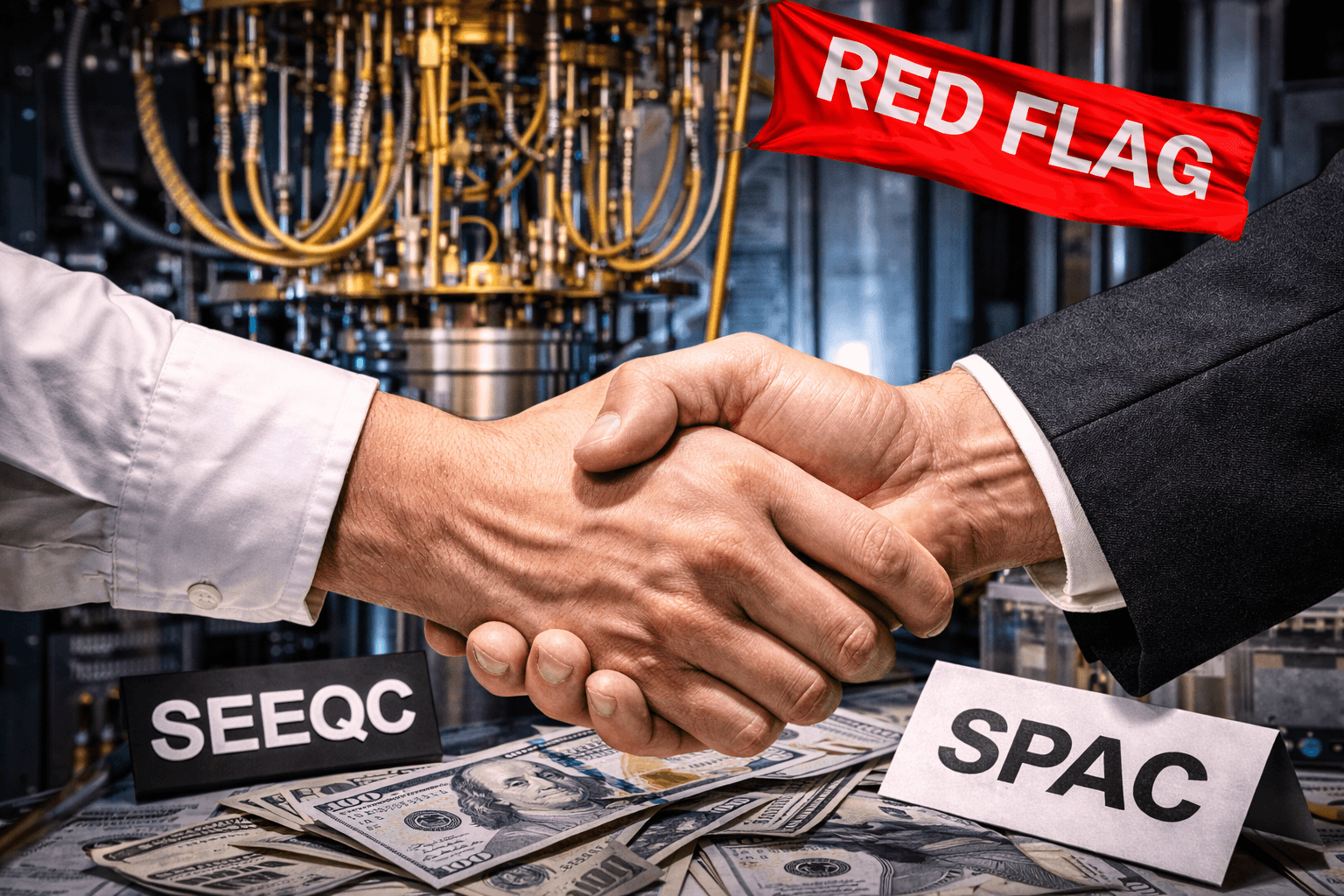
A transaction occurred between SEEQC, a quantum computing chipmaker, and Allegro Merger Group in January 2026, enabling the former to go public through a SPAC merger, which is expected to close in Q2 2026. The deal includes around $65 million in PIPE financing through subscription agreements, and ultimately values SEEQC at approximately $1 billion. However, the PIPE investors themselves are currently anonymous and are only described as “accredited investors,” which is a significant red flag for investors, as PIPE investor identity is crucial to the deal's credibility.
Since 2019, quantum computing has been transforming, and companies are now beginning to demonstrate milestones in which quantum machines perform better than traditional computers. SEEQC fits into the landscape as a digital quantum computing company that designs quantum-classical integrated chips, having a primary focus on superconducting quantum processors, ultimately allowing quantum computers to perform calculations much more efficiently than traditional computers. In particular, the company positions its architecture to reduce the latency of quantum computing operations. SEEQC has collaborated with government, academic, and industry partners, including IBM, NVIDIA, and DARPA (Defense Advanced Research Projects Agency). Third-party databases, i.e, ZoomInfo, estimate revenue at $11.4 million, but SEEQC has not publicly disclosed official revenue figures.
Despite the historic downsides and unreliability of SPAC mergers, SEEQC chose to go public through a SPAC merger rather than a traditional IPO. The strategic rationale for SEEQC is thus speed and certainty, as SPAC deals allow private companies to go public much more quickly than the traditional IPO process, which is important for an industry known for burning cash quickly through expensive hardware scaling and long research-and-development (R&D) cycles. In a SPAC deal, companies can go public in 3 to 6 months, compared to 12 to 18 months in a traditional IPO. Essentially, SEEQC is betting that the SPAC process can serve as a pipeline to quickly raise capital for emerging technologies that lack the patience for the traditional IPO timeline: the SPAC merger’s greater accessibility to easy cash, SEEQC believes, ultimately allows them to secure enough capital to maintain their hiring, R&D, and scaling processes.
Regarding the SEEQC SPAC, the sponsor company’s CEO, Eric Rosenfeld, has a mixed track record, with most companies simply “surviving,” one company ending in bankruptcy, and a deal being terminated in 2020. Outside this deal, Rosenfeld has been involved in six deals with lasting companies—Primoris Services Corporation (NYSE: PRIM), Pangaea Logistics Solutions Ltd (NASDAQ: PANL), NextDecade Corporation (NASDAQ: NEXT), Algoma Steel Group Inc (NASDAQ: ASTL), Hill International (NYSE: HIL, sold in December 2022), and Southland Holdings Inc (NYSEAMERICAN: SLND). Rosenfeld’s most successful deal—and only successful deal in which the stock price has risen since the merger—was Primoris Services Corporation, whose stock price has risen +1753.1%. However, the mean of their performances, excluding Primoris Services, in terms of percentage change in stock price since the SPAC merger’s IPO, is about -49%. Essentially, for the vast majority of companies involved in a SPAC merger with Eric Rosenfeld, their stock prices have split in half. Furthermore, SAExploration Holdings also underwent a SPAC merger but later entered Chapter 11 bankruptcy, and another deal involving both the original Allegro Merger Group and TGI Fridays was terminated because the minimum cash condition was not met. This poor track record thus produces skepticism about the future of SEEQC as it enters the public market.
In a SPAC, the size and identity of PIPE investors matter. Because SPAC investors can bail out when the target is announced, thereby jeopardizing the deal, the PIPE (committed capital) acts as a backstop, ensuring the transaction’s closing. Thus, the PIPE sends a vote of confidence in the deal by demonstrating those investors’ commitment. Therefore, PIPE investor quality is important and often part of the SPAC’s marketing in terms of legitimacy as a potent deal. Typically, in a SPAC deal, PIPEs account for between 20% and 40% of the deal size. Yet, the $65 million in PIPE investment is significantly lower, given the $1 billion valuation. Additionally, the PIPE investors are not disclosed, although they will be required to be in future SEC reports. These two factors, being unusually different from traditional SPAC mergers, should therefore be red flags for investors, as, for one, the anonymity of the PIPE investors removes a common credibility signal and increases uncertainty about the deal’s value, and, second, the small investment itself suggests limited backing of the deal.
There are further risks associated with this deal. Firstly, the dilution aspect of SPAC mergers can hurt a company in the long term. Because common shareholder value is reduced—as equity is divided in the merger—it may discourage investors from making the vital long-term investments needed for SEEQC’s success. Secondly, public stock markets demand consistently high returns, but frontier-tech industries, particularly ones involving hardware, are often unpredictable. Although the company may be progressing internally, its financials may not reflect that for investors. Thirdly, the negative history of SPAC mergers naturally gives SEEQC a stigma, possibly sparking investor skepticism and ultimately hurting the company’s ability to use the equity it sought to raise initially by going public.
An article in the Yale Journal on Regulation states that SPAC mergers (through 2022) have, on average, returned -62% and heavily underperformed the NASDAQ and Russell 2000 stock markets. Historically, these mergers have failed for two main reasons. Firstly, sponsors—businesses that form, fund, and control the companies that private companies merge with—have perverse financial incentives in the SPAC structure. Sponsors typically have 18-24 months from the SPAC’s founding to complete a deal; otherwise, they must return the capital to investors. Sponsors take around a 20% equity stake (the “promote”) in SPAC mergers, suggesting they are incentivised to complete as many deals as possible. Secondly, the company being taken public by the SPAC may receive only up to 70% of the investor funds because, in addition to the promote, banker and lawyer fees may consume 10% or more. This implies that lower‑quality companies are more likely to go public through a SPAC merger, since investment banks generally require the companies they underwrite for an IPO to meet higher quality standards.
Over the next several years, I predict that SEEQC’s SPAC merger will ultimately fail due to the immense risks associated with this type of merger and a skeptical view of the PIPE investment and the sponsor’s track record. There are three potential long-term implications for the competitive landscape, depending on SEEQC’s SPAC merger outcome. The first is that if the SPAC fails, it demonstrates that investors do not believe in quantum computing firms and are unwilling to back their substantial expenses, which means that more years of lab research and development are needed before they make a similar attempt again. The second implication is that if the SPAC is successful, the merger’s exposure shows other quantum computing firms that a SPAC merger is a potentially viable option for going public, potentially more attractive than a traditional IPO. Given that the quantum computing industry historically burns cash quickly, success for this deal raises the likelihood of a resurgence in SPAC mergers, specifically for frontier-tech companies. If SEEQC becomes successful in the long term, this resurgence would occur earlier than we previously thought, as SEEQC’s success could encourage other private quantum computing companies to go public through this route as well. This deal would thus mark the beginning of quantum computing’s transformation from simply research and development to actual commercial use because SEEQC's increased cash available on hand from going public implies they are ready to scale their business further, as commercialization and product development require more capital. More quantum computing firms going public would suggest that investors are confident in the industry's growth despite the costs involved. The third implication for the competitive landscape in the long term, if SEEQC is successful, is that other firms with similar capital needs will rush to raise more cash by going public through SPAC mergers or IPOs to hire and scale. In the end, this will split the landscape into two tiers: large firms that have gone public and the rest of the field, compiled by a consolidation of niche firms that either have unique specializations or will eventually be acquired by the larger firms. However, the probability that the final two potential implications occur is low because the initial conditions of anonymous PIPE investors, modest capital given the valuation, and a weak sponsor history are all strong signs that this SPAC will ultimately be unsuccessful. Therefore, these optimistic scenarios, regarding SEEQC stock performance, require unusually strong execution and supportive market sentiment, neither of which is likely.