A White House-backed pledge aims to stop AI-driven electricity demand from raising household bills. Yet while companies may absorb energy costs, the growing pressure on grids and water supplies remains unresolved.
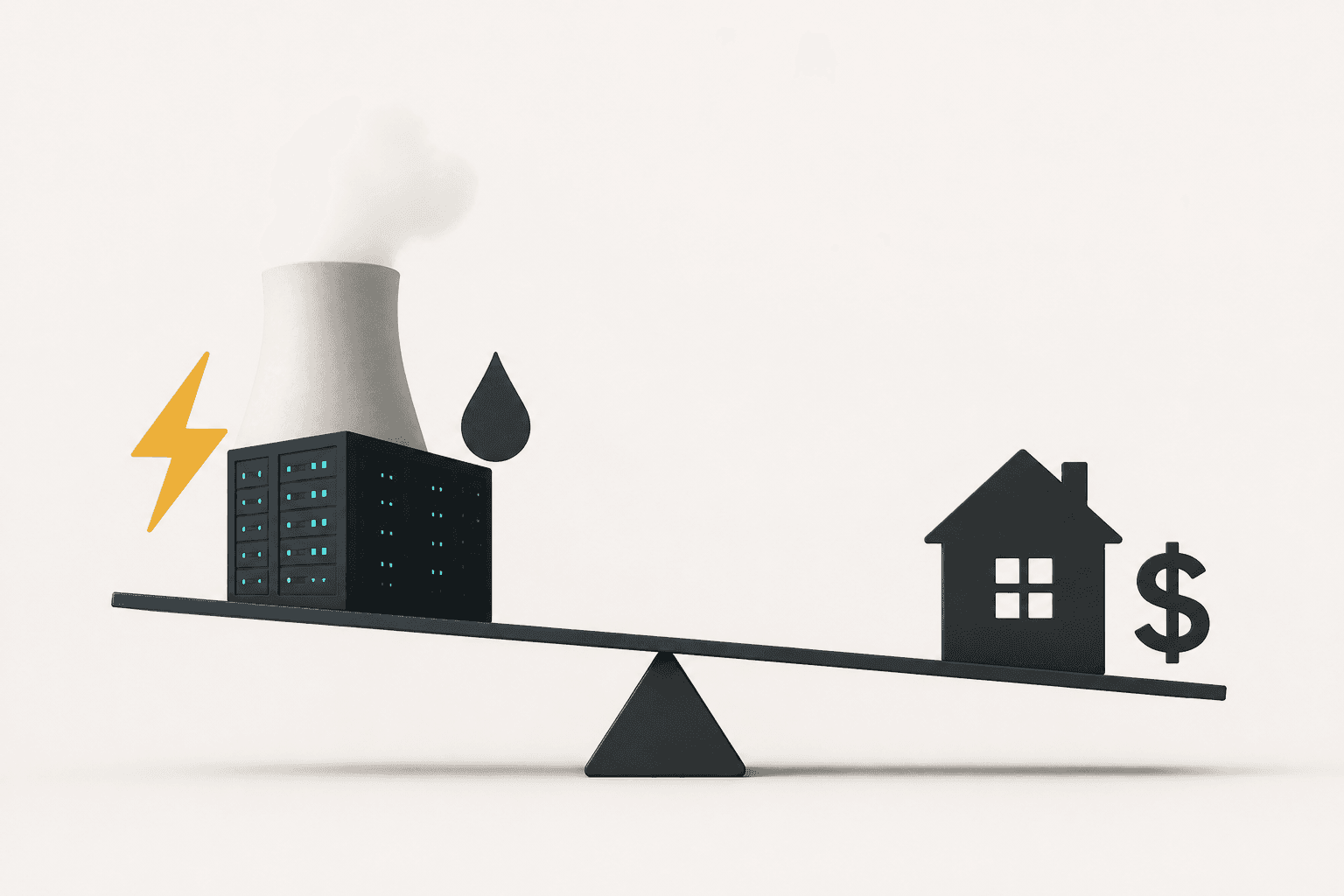
Major tech companies, including Amazon, Google, Microsoft, Meta, OpenAI, Oracle, and xAI, gathered to sign White House “ratepayer protection pledge” to fund the power behind the increased use of artificial intelligence. This is an effort to prevent electricity costs from spilling over to households. Yet due to increased use of water and energy from AI, there are concerns that the increased costs will resurface elsewhere. The capital spending of the world's 14 top publicly held data center operators is expected to reach about $750 billion this year, up from $450 billion last year. The total expected data center capex through 2029 is $3.3 trillion. They are acquiring more energy than ever before, while private investors are pouring money into AI startups.
At the heart of the AI use surge, the difference between training and interference is often overlooked. Training requires vast clusters of specialized chips operating continuously for weeks or months. A single frontier model can involve thousands of GPUs, using power at a scale comparable to small industrial facilities. Training is mainly a capital expense, requiring large companies such as Google to invest upfront for data centers, chips and power capacity. Interference is the small everyday queries, yet the cumulative effect consumes substantial amounts of energy. The need for advanced cooling systems also requires excessive water consumption, which threatens the freshwater supply. Only 3% of Earth’s water is freshwater, and only 0.5% of all water is accessible and safe for human consumption. While, data center developers are increasingly tapping into surface and underground aquifers to cool their facilities. The financial implications of water usage are often overlooked. Unlike electricity, which is closely regulated and priced by formal markets, water is usually subsidized. This means that while the tech companies pay directly for the costs associated with increased electricity use, some of the costs of water usage may be indirectly taken up my local communities. This raises the question of whether the full resource burden of AI is accurately accounted for. As AI services are now embedded in consumer and business use, it creates a persistent baseline demand that is difficult to scale down.
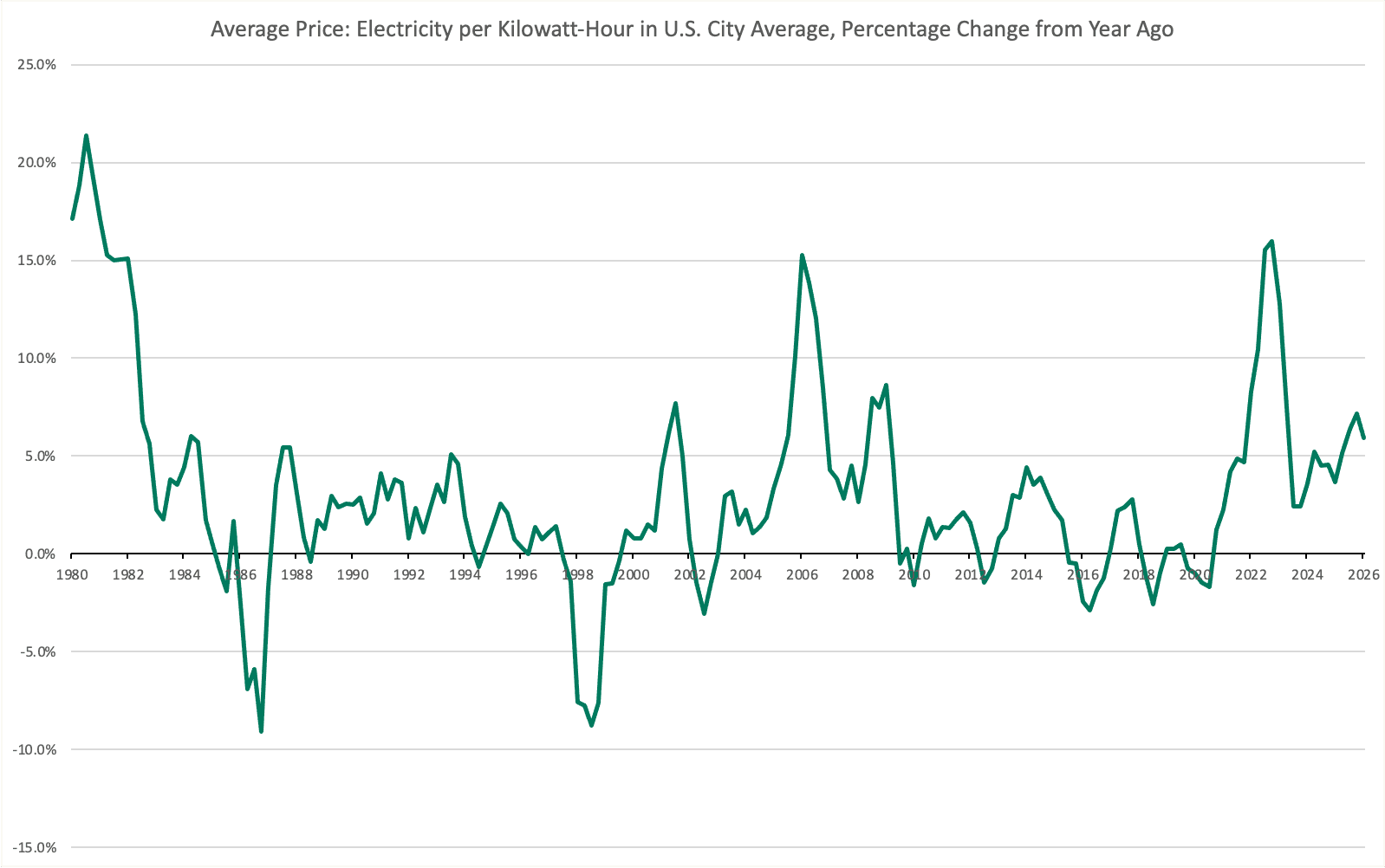
As AI systems grow more powerful, these facilities must run thousands of specialized computer chips and they also require large cooling systems, which means a single data center can use as much electricity as a small city. This voluntary agreement will make companies build, buy, or bring dedicated power generation for AI data centers and pay themselves for the necessary infrastructure. The main concern is that AI data centers consume 4-6% of US electricity and it is projected to already hit 12% by 2028. Because of this, residential prices have increased in the past year by 8%. In Northern Virginia, where most of these facilities are built, in the past 5 year prices have increased by 267%.
The central problem is timing, as electricity demand associated with AI is rising faster than new infrastructure can be built. As of early 2026, building a large-scale AI data center typically takes 4 to 7 years by relying on regional grid operators, it may take 1 to 3 years by relying on natural gas. The tech companies frame their AI expansion as environmentally friendly. In public statements, firms such as Google and Microsoft have emphasized their commitments to carbon-free energy and long-term sustainability targets. However, in reality, the new power capacity, of roughly 70-75%, that is being developed to support data centers, is tied to natural gas.
Ultimately, the rapid expansion of generative AI is not a temporary surge, but a structural shift in energy demand. The White House protection pledge addresses a narrow aspect of this problem of who will be paying for the electricity. By pushing tech companies to cover the costs of their energy use, it limits the direct costs passed down to households. However, it still doesn't resolve the rising strain on water usage and power grids. Ideally, with the help of investment in clean energy and grid modernization, supply will gradually catch up to the demand of AI. However, as AI continues to grow rapidly, this may be hard to achieve.