
ConocoPhillips’ $22.5 billion acquisition of Marathon Oil boosts scale and free cash flow but prioritizes shareholder returns over innovation. As consolidation deepens in the Permian, U.S. shale grows slower to adapt—shifting power toward OPEC and reshaping global energy dynamics.
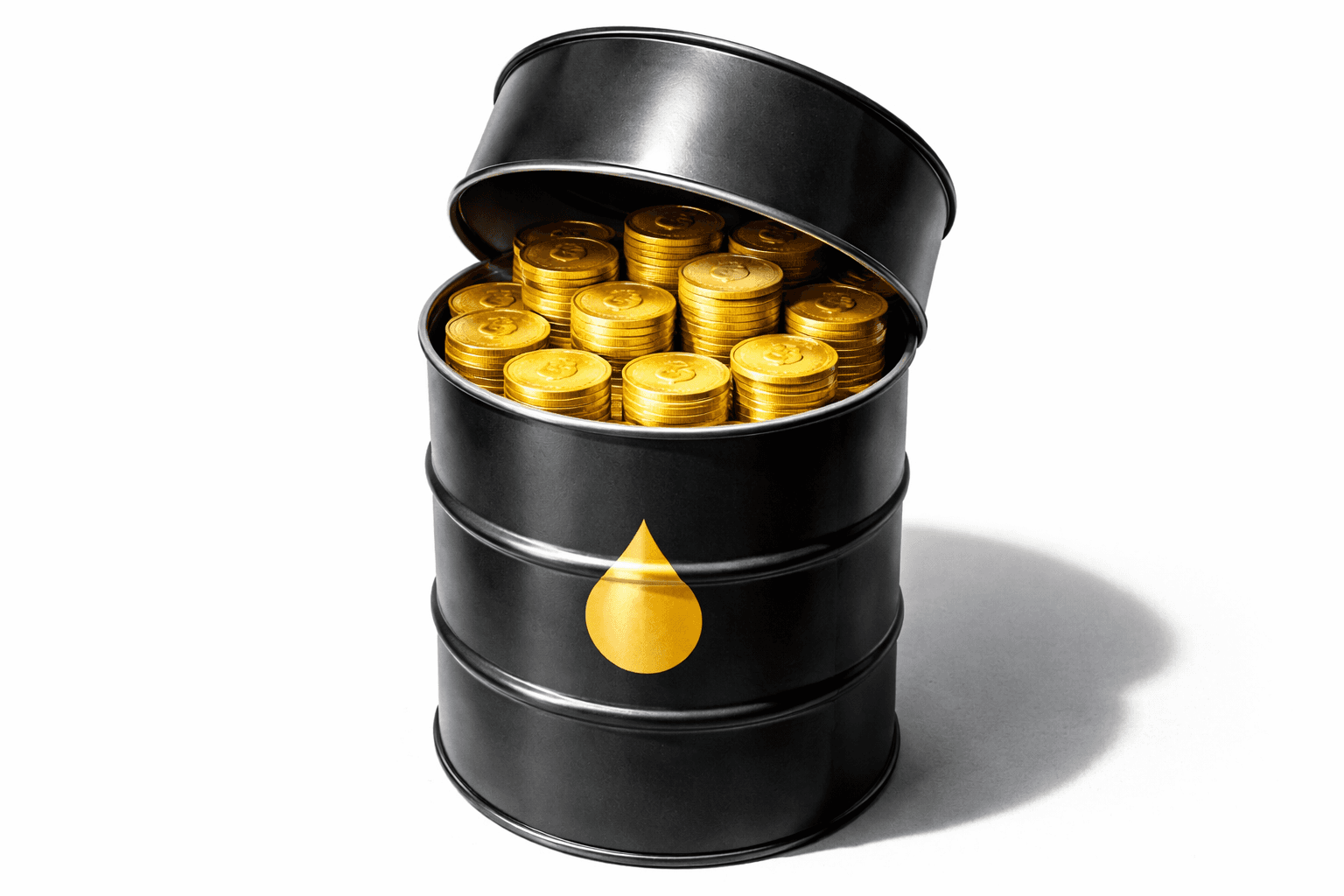
In May 2024, ConocoPhillips announced an all-stock acquisition of Marathon Oil valued at approximately $22.5 billion, offering Marathon shareholders 0.255 shares of ConocoPhillips per share. The transaction was completed on November 22, 2024. Marathon brought roughly 390 thousand barrels of oil equivalent per day of production and approximately 1.3 billion barrels of proved reserves, with a heavy concentration in the Permian Basin. Rather than meaningfully expanding technological capabilities or geographic diversification, the deal primarily adds scale within existing U.S. shale basins.
It’s unlikely that, with Marathon Oil's newly acquired capital, Standard Oil will continue to push the limits of innovation or new oil discoveries. Compared to other Oil Super Independents like Chevron and ExxonMobil, ConocoPhillips has made almost zero investments outside its legacy oil business. And even looking at overall R&D spending, ConocoPhillips invests significantly less than other major players, with only 1.7% of EBIDTA from 2020-2024 spent on R&D compared to Chevron’s 3.2%. While other companies are preparing for longevity and securing their place in the renewable energy transition by developing carbon capture technology, offsetting emissions, and investing in alternative fuels like hydrogen and biofuels, ConocoPhillips seems to either 1) be betting against the renewable energy transition occurring in the near-term or 2) be prioritizing near-term growth and an attractive balance sheet over long-term viability.
The latter seems more likely: Even if ConocoPhillips were fully disinvested from the renewable energy space, it would likely increase its investment in discovering new oil reserves or developing drilling techniques. Perhaps the Marathon Oil deal would entail some technology transfer that would significantly increase well efficiency on one side or the other. Except this isn’t the case, because both companies' wells operate at comparable efficiencies.
Which means this acquisition is purely a capital play. The Marathon acquisition—adding 20% to ConocoPhillips’ production base—amplifies free cash flow without altering the company’s underlying investment posture. The real, tangible advantage of this merger is not improved operational efficiency or technology transfer but capital discipline. Increased free cash flow doesn’t go toward increased R&D investment, exploration, or other expansion; it goes directly into share buybacks and balance-sheet fortification—all moves aimed directly at appeasing shareholders. Exemplifying this, ConocoPhillips already plans over $20 in stock buybacks over the next three years.
But while dividends increase, there are real costs to innovation and efficiency. Any major experimental drilling or risky technology bet is seen as counterproductive to shareholders. And with other oil giants also consolidating, this trend is only amplified. Competition in the oil industry no longer becomes a game of who can drill most efficiently, or who can discover new oil reserves, but rather who can best allocate their giant, consolidated pile of cash.
This is the rational behavior of these firms: With the merger completed, ConocoPhillips doesn’t need to reinvest to grow or stay competitive; the extra scale obtained from the merger does that for them. At an executive level, the best move is to invest the extra cash flow into stock buybacks, as R&D investment and exploration don’t guarantee increases in share value in the short or even long term.
This focus on capital allocation over technology improvements has threatening implications for the future of U.S. Oil, particularly in the Permian Basin, where these consolidations are concentrated.
Due to consolidations, the US supply chain is less primed to adapt in the case of a major supply shock. Bigger, consolidated players are slower-moving than smaller, independent firms, which have to meaningfully pioneer new technologies or discoveries to compete with large players. Larger corporate structures with fewer technology investments—like ConocoPhillips—cannot increase production quickly enough when oil prices rise, meaning consumers face less relief as oil prices stay high for longer. In the case of an oil supply crash, to preserve optics, ConocoPhillips can’t meaningfully cut production, management is incentivized to “ride it out,” protecting buybacks and keeping oil prices artificially low for longer, shuttering smaller players and increasing consolidation in the process.
However, there is another player who gains from this merger: OPEC. Consolidation in the Permian Basin, like this merger, sets the stage for OPEC to further leverage its pricing power. Historically, U.S. shale constrained OPEC by responding to price swings faster than most conventional producers: during the 2014–2016 collapse, Permian rig counts fell from 568 to 134, a rapid contraction that helped rebalance supply. In fact, EIA notes OPEC created OPEC+ in 2016 largely in response to the price collapse driven by surging U.S. shale output—an admission that U.S. barrels were eroding OPEC’s pricing power. But that shock-absorber role is now riskier because U.S. oil is increasingly concentrated: the Permian produced 48% of all U.S. crude in 2024, and output is increasingly controlled by a small set of top operators. With more US consolidation, the world loses its most important marginal oil supplier, and the result is a global oil market that is slower to adjust, more exposed to geopolitical disruption, and increasingly shaped by OPEC’s decisions.
In conclusion, while shareholders are set to gain in the near and medium-term from this merger, the ConocoPhillips acquisition of Marathon Oil points to an increasingly consolidated US oil market that is slower to adapt, favors capital discipline over meaningful efficiency and technological improvements, and cedes more power to the collusive OPEC.