
Old Glory Bank is wagering its century-old charter on crypto, pursuing a $250 million SPAC merger to fuse FDIC-insured banking with stablecoins, instant on-off ramps, and youth-driven digital demand—while balancing strict regulation against its promise of financial autonomy.
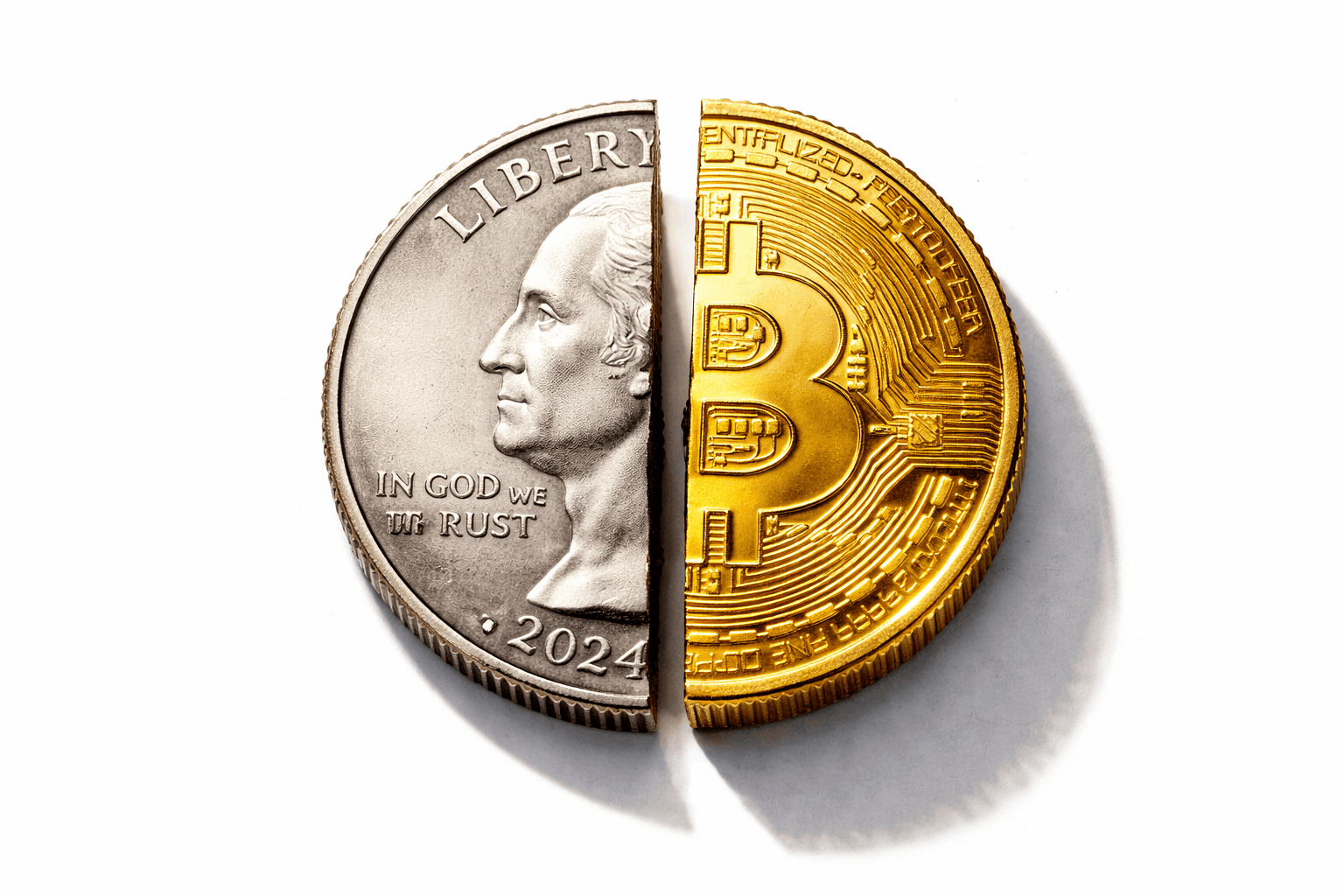
Old Glory Bank (OGB) is betting its 123-year-old charter on cryptocurrency. In a $250 million SPAC merger with DAAQ, this FDIC-insured bank sets its sights on becoming the first bank incorporating crypto into everyday banking as it navigates new policy restraints in the banking industry.
OGB’s merger with DAAQ reflects its two-pronged strategy: first, to advance their mission of freedom in banking; and second, to ensure adequate liquidity and promote continued growth.
Michael Staw, OGB’s co-founder and chief innovation officer, drew attention to OGB’s mission to provide individual autonomy, stating that “We intend for Old Glory Bank to be the first chartered bank to fully integrate crypto into daily banking.” While it may now be challenging to move money between bank accounts and on and off the blockchain, upon the merger, customers will have a seamless transfer experience between fiat and cryptocurrency. OGB plans to issue its unique brand of stablecoin (OGBUSD) pegged at 1:1 to the US dollar. This stablecoin will support the instant exchange and lending of crypto via OGB bank accounts. Along with OGBUSD, OGB is set to launch its Freedom Offramp, which will provide an instant transaction between digital assets and traditional fiat currency. The Freedom Offramp will enable customers to instantly and efficiently move value between their FDIC-insured account and the blockchain, bypassing third-party exchanges to encourage daily crypto use.
In addition, the transition to a Nasdaq-listed entity is also OGB’s strategic shift from a traditional deposit-based banking model to a valuation-based growth model. OGB achieved a deposit base surge from $10 million to $250 million in just three years; public listing aims for adequate liquidity to continue supporting its growth. This is facilitated by the merger with DAAQ, which holds $176 million in trust funds, and is supplemented by a targeted $50 million Private Investment in Public Equity (PIPE) financing. This funding provides vital assistance for OGB. On May 1, 2024, the FDIC imposed a “Cease-and-Desist” order on OGB—a speed limit on its growth. Under this Consent Order, OGB must meet a 14% Tier 1 leverage ratio, retaining twice as much emergency capital compared to other typical banks (average leverage ratio from 5% to 8%). This merger reflects OGB’s consideration to fulfill the FDIC regulatory requirement while supporting its future growth through incorporating crypto.
Currently valued at $250 million, OGB’s combined company value is estimated at $530 million. OGB’s shareholders expect to hold 47% of the new company ($250M OGB Equity/$530M Total Expected New Equity ≈ 47%), with the remaining 53% owned by DAAQ’s shareholders and investors participating in PIPE financing.
However, as OGB prepares for its $250M closing in Q1-Q2 of 2026, it faces a regulatory pincer: it must ensure its consumer branding—the promise of financial autonomy—and at the same time, maintain its federal compliance, aligning itself to IRS and KYC/AML requirements as a chartered bank.
Anti-Money Laundering (AML) is a legal requirement under the Bank Secrecy Act (BSA). The BSA is later expanded by the USA PATRIOT Act (Section 326), which is enforced by the Financial Crimes Enforcement Network (FinCEN). Know-Your-Customer (KYC) is a set of compliance procedures adopted by banks to satisfy AML. These procedures include Customer Identification (CIP), where banks are obliged to verify the identity of customers opening new accounts, including legal name, date of birth, address, and SSN/TIN. Other requirements include Customer Due Diligence (CDD), where banks need a clear understanding of the “nature and purpose” of customer accounts; Suspicious Activity Reports (SARs), where banks must file for any transaction over $5,000 that looks suspicious or is misaligned with their previous transactions; and Currency Transaction Reports (CTR) for any cash transaction exceeding $10,000.
So, OGB is not choosing whether to implement KYC or how to interpret it; the real tension lies in the balance between branding and regulation. And this tension creates a problem: if OGB protects customer privacy too much, their bank charter may be lost; if OGB complies completely with the bank charter, their conservative customer base may be alienated.
But OGB has a strategic position within the U.S. digital banking market. In 2025, the U.S. Digital Banking Platform Market has already reached an estimated valuation of $8.3791 billion and is expected to reach a projected revenue of $29.7376 billion by 2033. The 2024-2025 Federal Reserve Data indicates that only 6% of U.S. adults remain unbanked—this statistic refers to neither the adult nor their spouse owning a checking, savings, or money market account. Age groups with the highest unbanked rate are the 18-29 age group at 13%, followed by the 30-44 age group at 8%—both of these groups are significant drivers of cryptocurrency transactions.
The Federal Reserve Board further indicates that unbanked adults are more likely than banked adults to use cryptocurrency for financial transactions (5% vs. 2%), because they consider cryptocurrencies to be faster (18%) and more private (12%) alternatives to traditional systems. This recipient’s preference for cryptocurrency aligns perfectly with OGB’s Banking Bill of Rights, outlining its protection of freedoms, including freedom of association, censorship, lifestyle, and financial privacy.
According to a 2024 finding by the Pew Research Center, 42% of men ages 18-29 have ever invested in, traded, or used cryptocurrency, compared with 17% of women in the same age range, and 36% of men ages 30-49 have done this, compared with 15% of women in this age group. For OGB, this data defines a clear Serviceable Obtainable Market (SOM): young men dissatisfied with the traditional banking system who prioritize the integration of digital-asset tools in transactions. By targeting the crypto-active male demographic, which traditional banks have ignored, OGB can capture a valuable slice of the $8.3791 billion digital banking platform market.
As such, OGB’s advantages for its customers are clear: it provides financial assurance for conservative customers who trust FDIC but not the crypto-exchange technology. By using fiat and crypto in one tech stack, users can confidently request loans and buy stablecoins under FDIC security.
Now, consider OGB’s projections in three possible scenarios. In the base case, OGB becomes successful in establishing itself as a niche bank adopting on/off ramp technology to support its customers who prefer crypto over fiat currency in daily life. In the bear case, the launch of OGBUSD may lead to financial liabilities. In July 2025, President Trump signed the GENIUS Act—the first legal framework for stablecoins. This policy may impact OGB’s crypto plan. Every OGBUSD token must be backed with 1:1 reserves consisting of U.S. currency and short-term U.S. Treasuries, which may consume its profit margins under the 14% Tier 1 leverage ratio. In the bull case, OGBUSD becomes an “on-ramp” for Americans. With crypto now FDIC-insured, OGB does not just attract conservative customers but any user who exchanges crypto and prioritizes transaction speed, including non-conservative crypto holders. It can become the leader of a new prominent sector of the banking industry.
Ultimately, the joint venture will at least achieve the base case as long as OGB can meet the mandates of KYC/AML regulations and the new GENIUS Act to maintain 1:1 reserves for the OGBUSD stablecoin. The bull case will occur if OGB attracts a valuable slice of the $8.3791 billion digital banking platform market. Then, OGB can move beyond its initial $250 merger valuation to become the “Conservative Coinbase of America.”