
Pfizer’s acquisition of Metsera comes at a steep price: nearly three times the company’s valuation just eight months earlier. After abandoning its own GLP-1 program, Pfizer is paying a large premium to reenter the obesity market late. But the deal raises a question of whether Pfizer already lost?
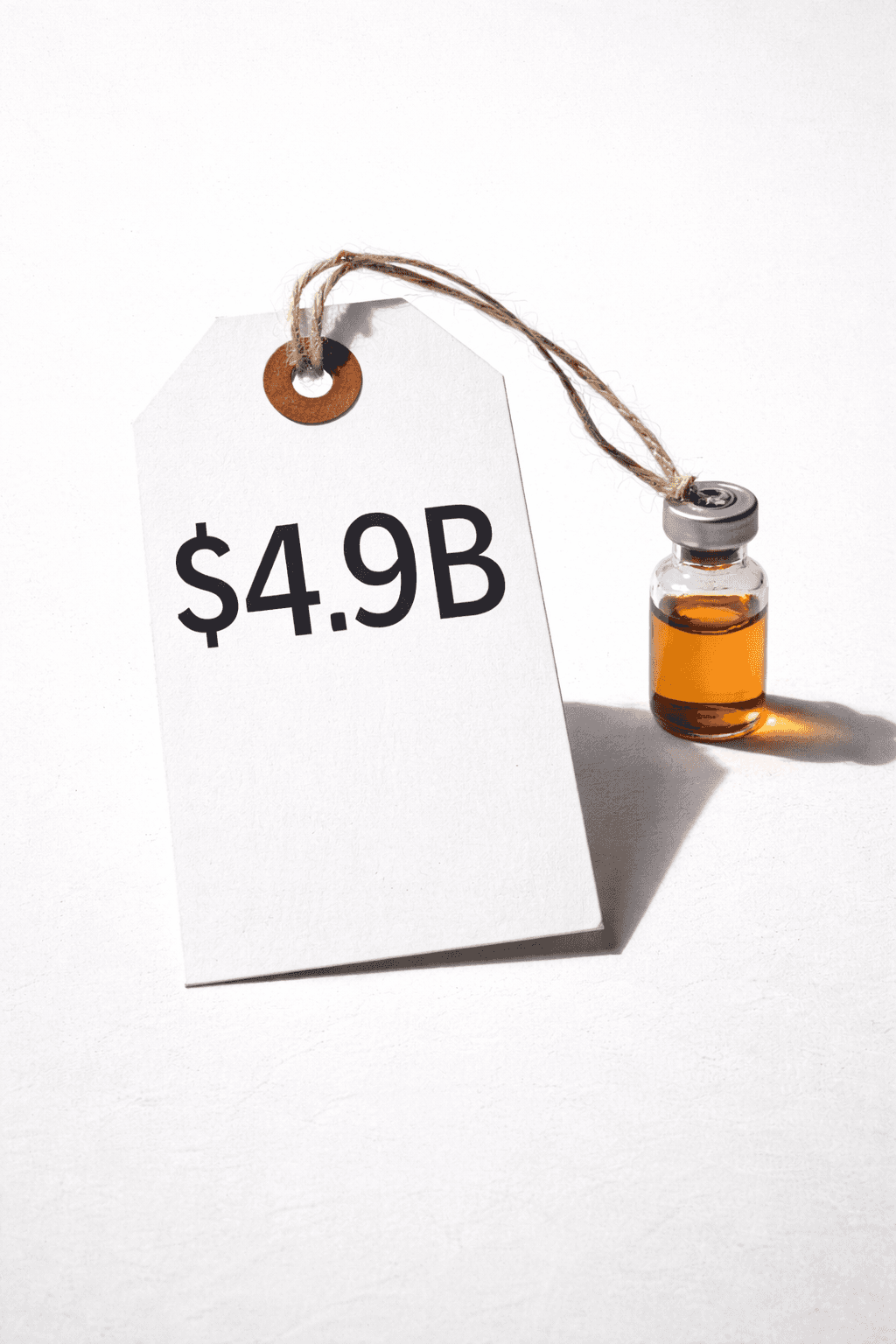
Pfizer just paid $4.9 billion for a company worth $1.8 billion eight months ago. Is this a desperate catch-up play in the obesity market, or a strategic attack? The answer will determine whether Pfizer wastes roughly 3% of its market capitalization chasing the GLP-1 wave.
Announced in October 2024, Pfizer brokered a $7.15 billion deal ($4.9 billion paid upfront with up to $2.25 billion in contingent value rights) to acquire Metsera, a Phase 2 company, contingent on manufacturing milestones. Success from Pfizer’s competitors (Novo Nordisk and Lilly in the weight-loss sector) has led Pfizer to discontinue its own GLP-1 competitor, Danuglipron. With the acquisition of Metsera, Pfizer assumes an already promising drug and the mounting risks associated with this investment.
The rushed time frame of this acquisition raises suspicions. In Pfizer’s publicly available 2024 K-10 form, they do not hint at plans for acquiring Metsera. Though the SEC doesn’t require explicit listing of this deal (since it falls outside the 2024 fiscal year), Pfizer typically provides “soft” due diligence a year prior. Pfizer’s K-10 forms previously referenced immunology or CNS expansion broadly, suggesting future investments in biopharmaceuticals. Hints came three months before the Arena acquisition and ten months before the Biohaven acquisition. Without mentioning weight-loss or GLP-1 drugs, and following the recent termination of their self-developed drug, Pfizer must have rapidly acquired Metsera to secure a new position in the weight-loss market without time for sufficient planning.
In turn for this rushed time frame, Pfizer paid nearly triple the company’s projected valuation in goodwill as a massive strategic premium. Metsera IPOed at a $1.8 billion market capitalization in March 2024, but the deal values it at $4.9 billion, representing a 172% premium. The sector’s compound annual growth rate of **~54%—meaning the market grows by roughly 54% per year on a compounding basis—**projects Metsera’s real value at approximately $2.4 billion.
An M&A deal of $4.9 billion upfront with up to $2.25 billion in CVRs represents a significant investment by Pfizer (market capitalization ~$150 billion); failures in drug trials or in market share could send Pfizer’s stock plummeting and cause investors to suffer serious consequences. CVR milestones below outline what Pfizer must achieve merely to enter the market.
Milestone Category | Specific Event | Projected Timeline / Deadline |
Development | Initiation of Phase 3 program for MET-097i (monotherapy) | On track for Late 2025 |
Regulatory (CVR 1) | FDA Approval of MET-097i (monthly monotherapy) | Deadline: December 31, 2029 |
Regulatory (CVR 2) | FDA Approval of MET-097i + MET-233i (monthly combination therapy) | Deadline: December 31, 2031 |
Commercial | Projected Launch of MET-097i | As early as 2028 or 2029 |
To capitalize on this risky investment, Pfizer’s MET-097i must both pass drug trials and outcompete Novo and Lilly’s GLP-1 drugs, requiring approval as soon as possible. If Phase 2 succeeds and MET-097i proves more successful than competitors, Pfizer could achieve substantial sales and justify the goodwill paid to Metsera. However, a more likely outcome is that Phase 2 succeeds, but MET-097i fails to compete due to delayed timelines and a shrinking window to capture market share. If trials fail outright, Pfizer will write off nearly $5 billion and abandon the GLP-1 market entirely, leaving the company nearly two years behind competitors.
Pfizer’s MET-097i will likely receive FDA approval as a consumer product, but having accomplished too little too late. Projections suggest MET-097i will be available at the earliest from 2028–2029, giving Novo and Lilly’s GLP-1 drugs—released in 2023—a five-plus-year head start. Analysts from Evaluate project Novo and Lilly’s duopoly to generate $72 billion in combined sales within a $132 billion total market. Furthermore, analysts project minimal sales for MET-097i in its first year, with peak sales of approximately $5 billion around 2035–2038. A narrow opportunity to compete against entrenched incumbents is an investment not worth holding.
Pressure from adjacent markets also mounts. Shorter-chain weight-loss peptides, often unpatented, have received nearly 10 million engagements online across TikTok, Reddit, and Telegram in the past six months. One such drug, Retatrutide, targets not only GLP-1 pathways but other fat-burning pathways. Despite FDA warnings against illegally compounded versions, demand continues to grow. Analysts project Retatrutide could receive FDA approval by 2028, approximately when MET-097i would enter the market. In the coming years, delayed timelines and competition both within and outside the GLP-1 sector are likely to prevent Pfizer from capturing meaningful market share, potentially destroying over $7 billion in value. Excess goodwill, rushed acquisition, and shareholder pressure to chase the weight-loss trend leave Pfizer overextended in the GLP-1 market once again.