
Verizon’s $20bn acquisition of Frontier is a wager on fiber as the backbone of future connectivity. While the technology promises scale and resilience, the deal’s success depends on execution and returns that justify its heavy cost.
Verizon’s $20 billion acquisition of Frontier Communications is a strategic bet on the future of digital infrastructure. The rationale for the acquisition is rooted in capacity and long-term demand trends. Fiber remains the most scalable broadband solution for delivering high-speed internet access. While 5G and fixed wireless access (FWA) have improved dramatically in performance, they are constrained by network congestion, particularly in dense or high-usage environments. Satellite providers such as Starlink expand access in rural and remote regions, but latency and weather sensitivity limit their ability to compete in urban or enterprise markets. Cable incumbents such as Comcast and Charter also remain strong competitors because they possess extensive last-mile networks, yet fiber offers greater long-run upgrade potential. Fiber’s virtually unlimited capacity makes it uniquely suited to support exponential growth in data demand driven by cloud computing, AI workloads, and high-definition streaming. This deal expands Verizon’s fiber network and allows it to create new value for consumers through integrated offerings. Fiber enables Verizon to bundle broadband with its 5G wireless services, deepening customer relationships and increasing average revenue per user. By expanding its fiber footprint through Frontier, Verizon strengthens both its fixed and mobile businesses simultaneously.
However, the financial implications of this deal are not trivial. By undertaking this acquisition, Verizon assumes approximately $10 billion in Frontier’s debt while committing to significant expenditures required to modernize and integrate the network. This makes the transaction dependent on disciplined execution and whether Verizon can generate returns on invested capital (ROIC) above its cost of capital. ROIC measures the profit earned on deployed capital, while the cost of capital reflects the minimum return required by debt and equity investors. If those returns fail to materialize, the acquisition could become a costly investment rather than a value creator. Competition also remains intense. In the near future, the broadband landscape will remain fragmented across fiber, cable, wireless, and satellite, with each technology serving different segments. Cable providers benefit from existing infrastructure and lower upgrade costs through technologies like DOCSIS, allowing them to increase speeds without the same level of capital intensity. However, these networks face long-term limitations relative to fiber, particularly as data demand continues to rise. Over time, capacity constraints will become binding, favoring infrastructure that can scale efficiently. Fiber, despite its high upfront costs, offers low marginal costs and superior performance at scale, suggesting Verizon’s prioritization of long-term network resilience and cost efficiency. Ultimately, Verizon is not betting on outdated technology but on the foundational infrastructure that underpins all competing networks. While wireless and satellite solutions will continue to play important roles, they are unlikely to displace fiber as the backbone of broadband. The real risk, therefore, is execution—particularly Verizon’s ability to upgrade Frontier’s network, achieve integration, and generate sustainable returns.
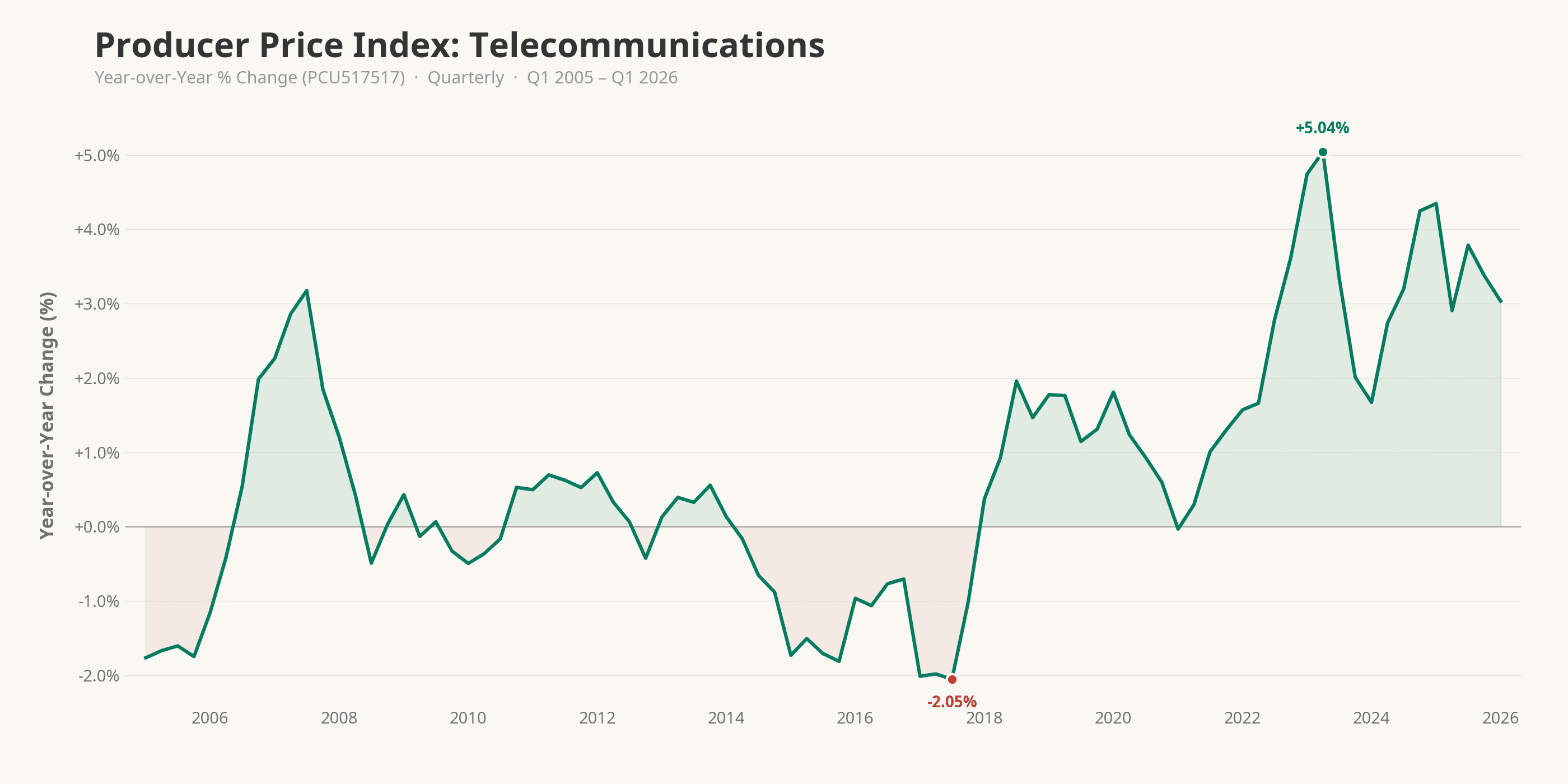
That outcome appears feasible, as Verizon has clear advantages in capital, scale, and operational expertise, positioning it to succeed where Frontier previously struggled. Unlike Frontier, which faced persistent financial constraints and underinvestment, Verizon has the balance sheet capacity to fund large-scale network upgrades without the same liquidity pressures. This allows it to invest more consistently and efficiently over time. Operationally, Verizon also brings significantly more experience in executing complex infrastructure projects and integrating large networks. Its established systems for maintenance, customer service, and network optimization reduce the risk of underperformance or inefficiencies. Together, these advantages increase the likelihood that Verizon can not only modernize Frontier’s network but also fully monetize it.
At a broader industry level, this acquisition reflects the growing convergence of telecommunications markets. Companies no longer compete in isolated verticals such as mobile, broadband, or media. Instead, firms increasingly compete through bundled ecosystems of wireless, fiber, and digital services. Fiber is central to this strategy because it supports both home broadband and wireless backhaul, helping Verizon reduce churn and improve network quality across products. Beyond the strategic logic of the acquisition, the deal also highlights the growing regulatory complexity surrounding telecom M&A. After more than a year of scrutiny and approval conditions tied to service quality, workforce impacts, and investment commitments in underserved areas, broadband is increasingly treated as essential infrastructure subject to political and social oversight. Consequently, large-scale mergers that increase national concentration will likely push future M&A toward smaller, regional acquisitions. Deals like Frontier provide immediate fiber expansion and strategic fit while attracting less antitrust scrutiny. If Verizon executes successfully, the deal may become a model for targeted scale expansion, whereas failure to generate adequate returns could deter similarly ambitious fiber acquisitions across the industry.

Next Article

Related Topics